
Clean and hygienically perfect water is the basis for the safe operation of swimming pools, pools and spa facilities. To ensure consistently high water quality, various water parameters must be checked regularly.
The pH value, redox potential (ORP), conductivity and other water values in particular provide important information about the condition of the water and the effectiveness of treatment and disinfection measures.
Regular measurements allow deviations to be detected at an early stage and suitable water care measures to be implemented in a targeted manner.

Why is pool water analysis important?
The water quality in swimming pools is influenced by numerous factors. Bathers, weather conditions, disinfectants and environmental influences continuously change the composition of the water.
Regular monitoring of the water parameters helps:
- Maintaining stable water quality
- Monitor the effectiveness of disinfection measures
- Recognize fluctuations at an early stage
- Optimize the use of water care products
- Protect technical systems
- Improve operational safety
The pH value in the pool water
The pH value is one of the most important parameters in pool maintenance. It influences numerous chemical processes and has a direct impact on the effectiveness of many water treatment measures.
Even small deviations can change the water quality and make pool maintenance more difficult. The pH value should therefore be checked and documented regularly.
Many swimming pools and pools aim for a pH value between 7.0 and 7.4. Water care and disinfection can work particularly effectively in this range. Regular measurements help to detect fluctuations at an early stage.
Further information:
- To the parameter page pH value
Redox potential (ORP) and disinfection control
The redox potential (ORP) describes the oxidizing or reducing effect of water and is often used to monitor disinfection processes.
In swimming pools, the ORP value serves as an important indicator for the effectiveness of oxidants and disinfectants. Regular monitoring helps to ensure good water quality in the long term.
In many swimming pool applications, ORP values between around 650 and 750 mV are aimed for. However, the optimum range can vary depending on the disinfection system used and the respective operating conditions.
Further information:
- To the parameter page Redox potential
- Our guide explains how to measure, calibrate, and interpret the ORP value How do I measure the ORP value? Step by step.
Conductivity and dissolved substances
Electrical conductivity (EC) provides information about the concentration of dissolved ions and substances in the water. Changes in conductivity can provide indications of changes in the water composition.
Conductivity measurement can be used for supplementary water quality monitoring, especially in larger systems.
Further information:
- To the parameter page Conductivity (EC)
- To the parameter page TDS
Typical challenges in pool water maintenance
The following challenges often arise when monitoring swimming pool water:
- Fluctuating pH values
- Changes in water quality
- Imbalances in disinfection processes
- Increase in dissolved substances in water
- Seasonal loads
- Different intensities of use
Regular monitoring of the most important water parameters helps to detect these changes at an early stage.
Recommended measuring devices for swimming pools and pools
They are particularly suitable for monitoring pool water:
- pH meters
- ORP meters
- Conductivity meters
- Multi-parameter measuring devices
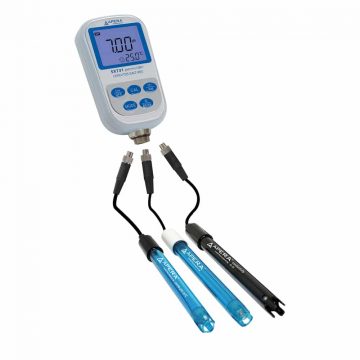
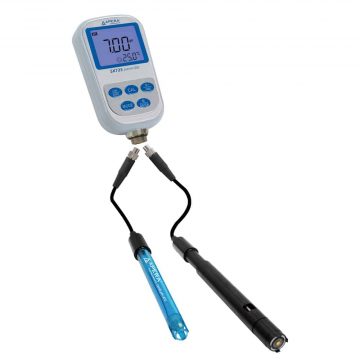
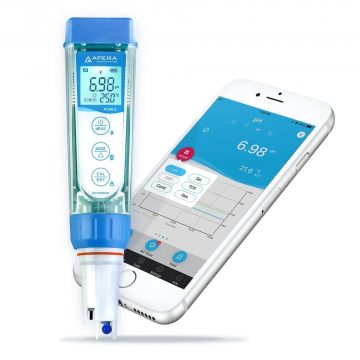
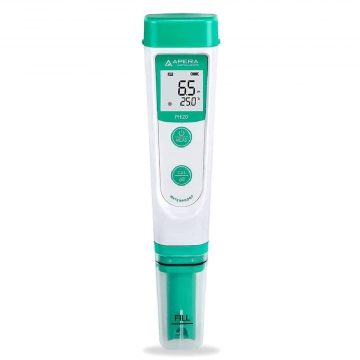
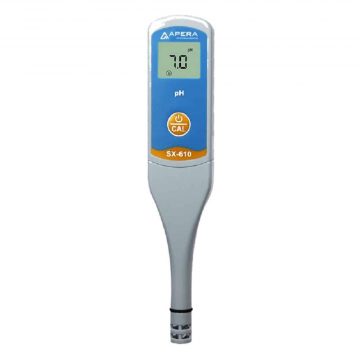
Apera Instruments offers professional measurement solutions for private pools, public swimming pools, spas and water treatment applications. The devices enable fast and reliable measurements directly on site.
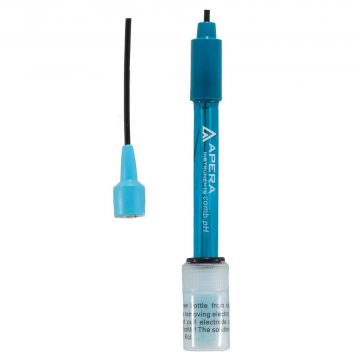
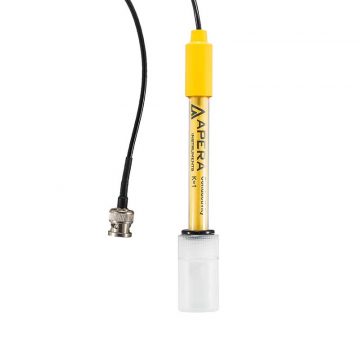
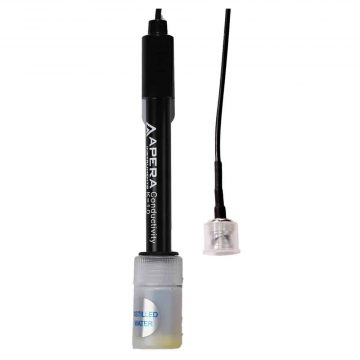
Here you will find a selection of electrodes and meters which are ideal for measuring pH, conductivity and ORP in swimming pools or swimming pools. The electrodes are compatible with common automated measurement and control systems for swimming pools (BNC connection).
Worthy of special mention are our double-junction electrodes, which are particularly reliable, durable and low-maintenance thanks to their special diaphragm structure. Our catalog “Special electrodes for swimming pools” provides an overview.
Detailed Guide: Testing Pool Water: How to Measure pH, Chlorine, and Hardness Correctly.
Related topics
If you would like to find out more about individual measurement parameters, you can find further information on our specialist pages:
- pH level
- Conductivity (EC)
- TDS (Total Dissolved Solids)
- Salt content (salinity)
- Dissolved Oxygen
- Water Hardness
-
Product on sale
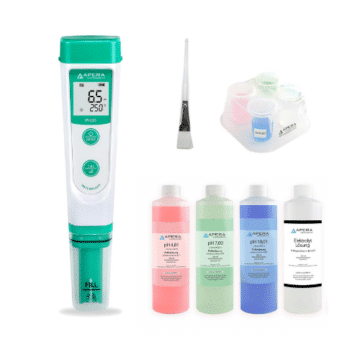
 PH20 Pocket Tester with Calibration Solution SetUVP: Original price was: 116.62 €.93.30 €Current price is: 93.30 €.
 -
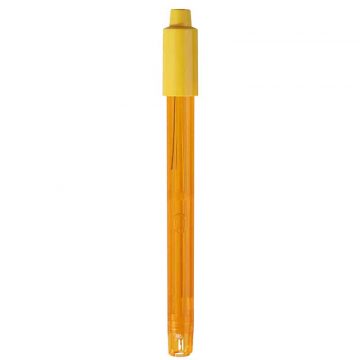
301DJ-C/2 Plastic ORP Combination Electrode (2 m)84.37 €
-
PCO60-Z Smart Multiparameter Meter309.40 €
-
SX751 portable pH/Dissolved Oxygen (DO)/ORP/Conductivity (EC)/TDS/Salinity/Resistivity Meter946.05 €
-
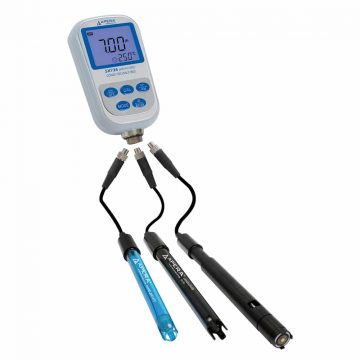
SX736 portable pH/Conductivity (EC)/TDS/Salinity/Resistivity/Dissolved Oxygen (DO) Meter856.80 €
-
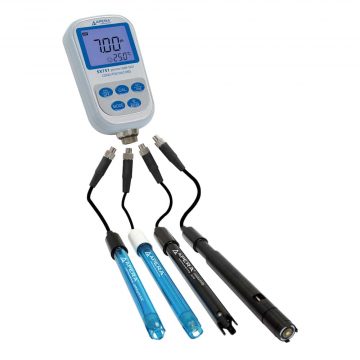
SX731 portable pH/ORP/Conductivity (EC)/TDS/Salinity/Resistivity Meter573.58 €
-
SX725 portable pH/Dissolved Oxygen (DO) Meter689.01 €
-
301DJ-C Plastic ORP Combination Electrode (1 m)82.11 €
-
201DJ-C Double-Junction Combined pH Electrode, BNC (1 m)51.17 €
-
2401-C Glass conductivity electrode, BNC105.91 €
-
2301-C Conductivity electrode, BNC69.02 €
-
PC60-Z Smart Multiparameter Meter232.05 €
-
PH20 Value pH Pocket Tester83.30 €
-
ORP60 Premium ORP Pocket Tester154.70 €
-
SX610 pH Pocket Tester89.25 €