
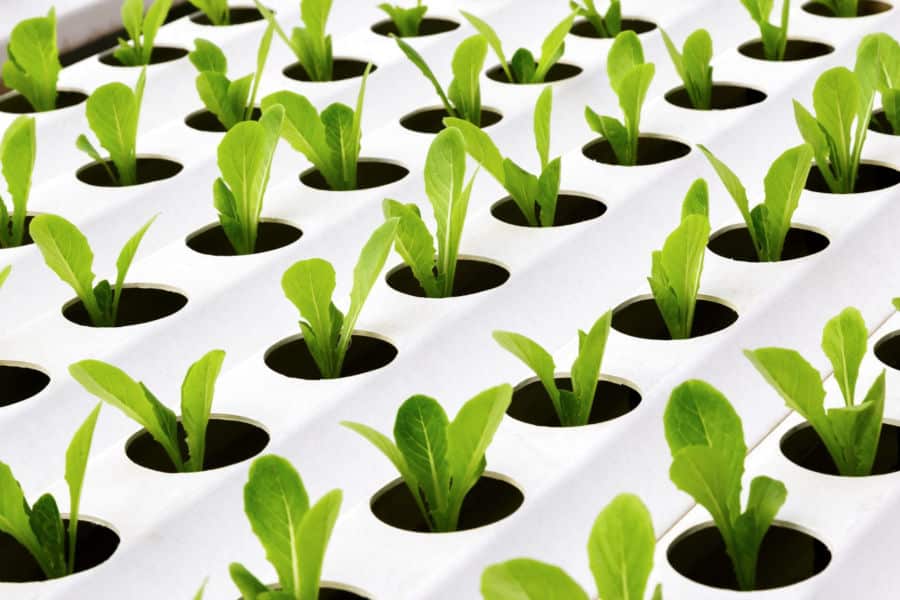
Hydroponics has become increasingly important in recent decades. In contrast to traditional cultivation in soil, the plants grow in a nutrient solution that contains all the important minerals. This allows nutrients to be added in a targeted manner and plant growth to be precisely controlled.
For plants to grow healthily in a hydroponic system, two water parameters in particular must be monitored regularly: the pH value and the electrical conductivity (EC). Both values directly influence the nutrient uptake and therefore the development of the plants.
Why is water analysis important in hydroponics?
As plants in hydroponic systems are completely dependent on the nutrient solution, even small changes in water quality can lead to growth disturbances.
Regular monitoring of the most important water parameters helps:
- Recognize nutrient deficiencies at an early stage
- Avoid over-fertilization
- Optimize nutrient absorption
- Promote plant growth
- Reduce yield losses
The pH value and EC value in particular should therefore be checked regularly.
The pH value in hydroponics
The pH value influences the availability of nutrients in the nutrient solution. Even if sufficient nutrients are available, plants can only absorb them to a limited extent if the pH value is unsuitable.
Typical target ranges in hydroponic systems are between pH 5.5 and 6.5. Plants can absorb most important nutrients particularly well in this range. Values outside this range can affect the availability of individual nutrients and lead to growth problems in the long term.
Further information:
- To the parameter page pH value
- To the blog article What is the pH value?
The EC value in hydroponics
The EC value (electrical conductivity) describes the electrical conductivity of the nutrient solution and provides information about the concentration of dissolved nutrients.
An increasing EC value usually indicates a higher nutrient concentration. If the value is too low, deficiency symptoms may occur. If it is too high, plants can be damaged or develop nutrient stress.
The optimum EC value depends on the respective plant species and growth phase. Many herbs, lettuces and vegetable plants are typically cultivated in ranges between 1.0 and 3.0 mS/cm. Plants that are particularly in need of nutrients may require higher values.
Further information:
- To the parameter page Conductivity (EC)
- To the parameter page TDS
- To the parameter page Salt content (salinity)
Other important water parameters
In addition to pH value and EC value, other parameters may be relevant depending on the system:
Temperature
The water temperature influences both the nutrient uptake and the Dissolved Oxygen content of the nutrient solution.
Dissolved oxygen (DO)
Sufficient Dissolved Oxygen supports root health and promotes plant growth.
Water Hardness
Calcium and magnesium content can influence the composition of the nutrient solution and should be taken into account for professional applications.
Typical challenges in hydroponics
The following problems often occur when cultivating in hydrosystems:
- Fluctuating pH value
- Nutrient concentration too high
- Nutrient concentration too low
- Oxygen deficiency in the root area
- Calcium and magnesium imbalances
- Incorrect dosing of fertilizers
Regular measurements help to identify these problems at an early stage and take targeted countermeasures.
Recommended measuring devices for hydroponics
Regular checks of the nutrient solution are particularly suitable:
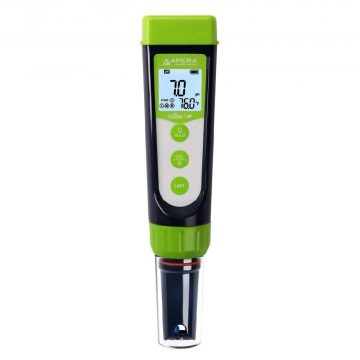
- pH meters for monitoring the acidity level
- EC meters for monitoring the nutrient concentration
- Multi-parameter measuring devices for the combined measurement of several values
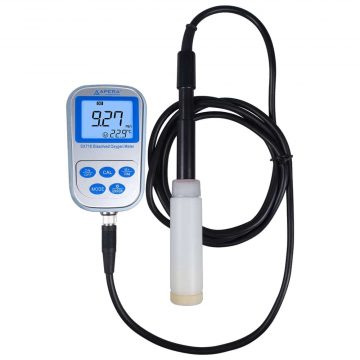
- Oxygen meters for professional applications
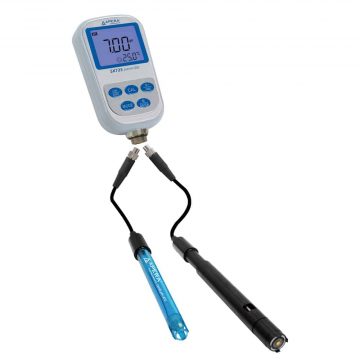
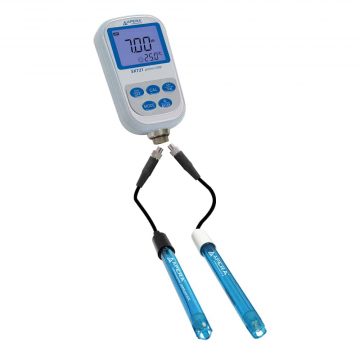
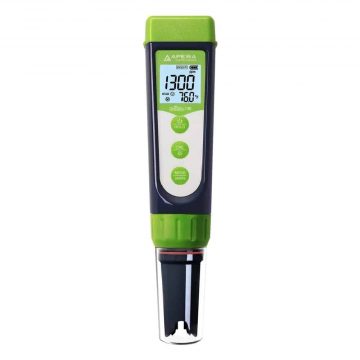
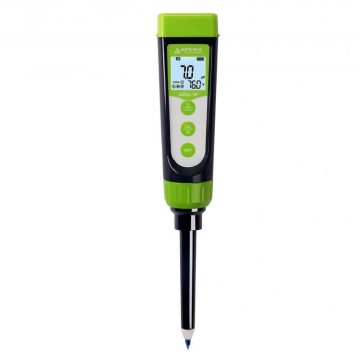
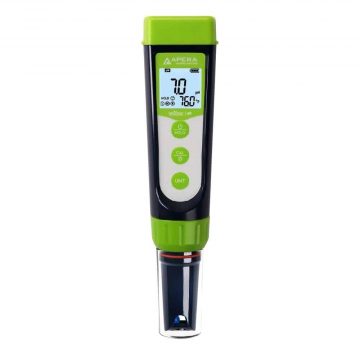
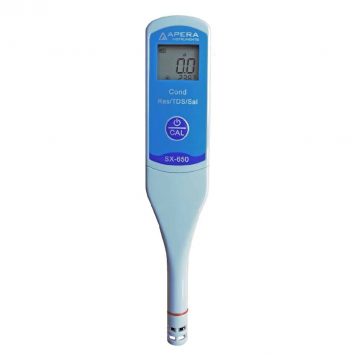
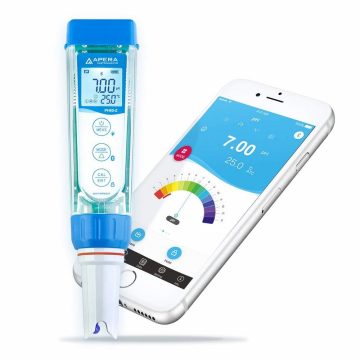
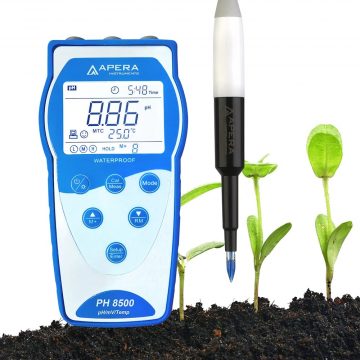
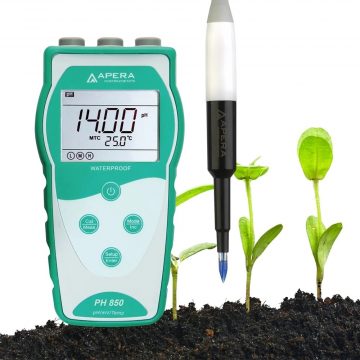
Apera Instruments offers a wide range of devices for hobby users, ambitious plant enthusiasts and professional operations. The hydroponics category includes pH, EC, TDS, salinity and multi-parameter measuring devices for different requirements.
Related topics
If you would like to find out more about individual water parameters, you can find further information on our specialist pages:
- pH level
- Conductivity (EC)
- TDS (Total Dissolved Solids)
- Salt content (salinity)
- Dissolved Oxygen
- Water Hardness
The section “EC Levels in Hydroponics” specifies which EC level is appropriate for which plant and growth stage, along with specific target values.
-
Product on sale
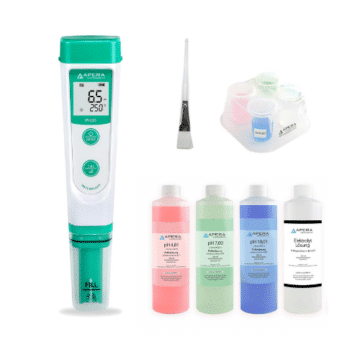
 PH20 Pocket Tester with Calibration Solution SetUVP: Original price was: 116.62 €.93.30 €Current price is: 93.30 €.
 -
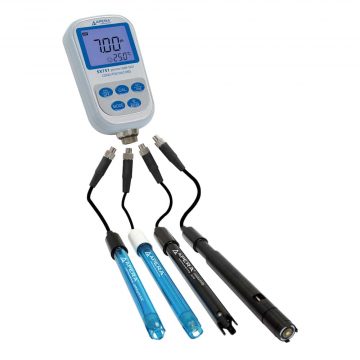
SX751 portable pH/Dissolved Oxygen (DO)/ORP/Conductivity (EC)/TDS/Salinity/Resistivity Meter946.05 €
-
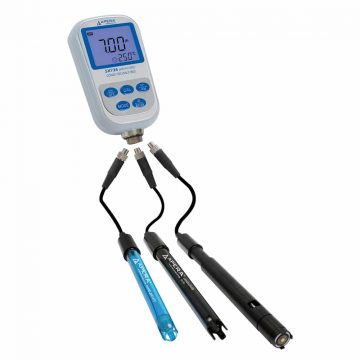
SX736 portable pH/Conductivity (EC)/TDS/Salinity/Resistivity/Dissolved Oxygen (DO) Meter856.80 €
-
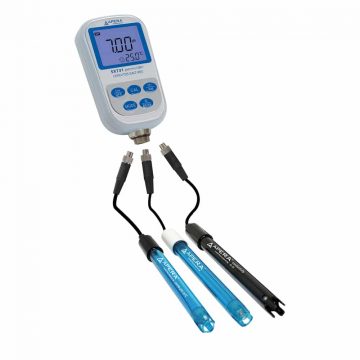
SX731 portable pH/ORP/Conductivity (EC)/TDS/Salinity/Resistivity Meter573.58 €
-
SX725 portable pH/Dissolved Oxygen (DO) Meter689.01 €
-
SX721 portable pH/ORP meter351.05 €
-
SX716 portable Dissolved Oxygen (DO) Meter589.05 €
-
GroStar™ GS4 pH/EC Pocket Tester191.59 €
-
GroStar™ GS3 conductivity Pocket Tester114.24 €
-
GroStar™ GS2 PenTester for soil samples274.89 €
-
GroStar™ GS1 pH Pocket Tester120.19 €
-
SX650 conductivity pocket meter126.14 €
-
PH60-Z Smart pH Meter172.55 €
-
PH8500-SL pH meter for soils (direct measurement) with GLP memory function and data output553.35 €
-
PH850-SL pH meter for soils (direct measurement)458.15 €