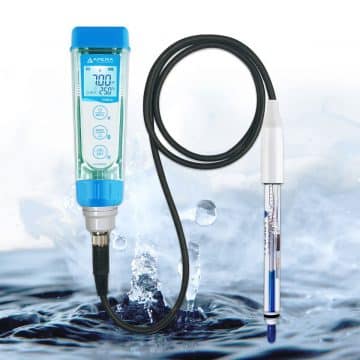

The pH level is one of the most important measured variables in water analysis. It provides information on whether a liquid is acidic, neutral or alkaline and plays a decisive role in the assessment of water quality. pH measurement is used in numerous areas, including drinking water monitoring, water treatment, aquaristics, agriculture, food production and industrial processes.
A stable and suitable pH value is often a prerequisite for optimal biological, chemical and technical processes. This is why pH measurement is one of the most frequently performed analyses worldwide.
What is the pH value?
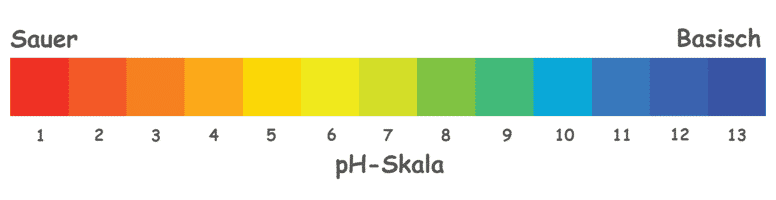
The pH level describes the acidity of a liquid. The pH scale usually ranges from 0 to 14. A value of 7 is considered neutral. Values below 7 are described as acidic and values above 7 as basic or alkaline.
Even small changes in the pH level can have a significant impact on chemical reactions, biological processes and water quality. For this reason, the pH value is continuously monitored in many applications.
Why is pH measurement important?
The pH level influences numerous properties of a liquid and can have an impact on processes, products and organisms. Regular monitoring helps to ensure optimum conditions and detect deviations at an early stage.
The pH measurement is used, among other things, for
- Drinking water analyses
- Water treatment
- Swimming pools and spa facilities
- Aquaristics and fish farming
- Hydroponics and agriculture
- Food and beverage industry
- Environmental monitoring
- Laboratory applications
- Industrial production processes
In many areas, the pH level is an important quality parameter and part of regular checks.
How is the pH value measured?
For precise results, the pH level is now predominantly determined using digital pH meters. These use special pH electrodes that react to changes in the sample and record the measured value within a few seconds.
Compared to test strips or indicator solutions, electronic pH meters offer significantly higher accuracy and reproducibility. They are suitable for laboratory applications as well as for mobile use on site.
Regular calibration of the measuring device helps to ensure permanently reliable measurement results.
What factors influence the pH level?
The pH level of a liquid can be changed by various natural and technical influences. These include, among others:
- Dissolved minerals and salts
- Carbon dioxide from the ambient air
- Chemical additives
- Temperature changes
- Biological processes
- Contamination and environmental influences
Depending on the application, it is therefore advisable to check the pH level regularly.
Typical areas of application for pH measurement
pH measurement is of central importance in numerous industries and areas of application.
Water treatment
When treating drinking water, process water or wastewater, pH measurement helps to monitor water quality and comply with legal requirements.
Aquaristics and fish farming
Many fish and plant species react sensitively to changes in the pH level. Regular monitoring contributes to stable living conditions.
Agriculture and hydroponics
The pH level influences the availability of nutrients and plays an important role in healthy plant growth.
Industry and laboratory
In laboratories and industrial processes, pH measurement is used for quality control and process monitoring.
pH meters from Apera Instruments
Apera Instruments offers high-quality pH meters for professional applications and private use. The range includes compact Pocket Testers, portable measuring systems and laboratory devices for precise measurements in a wide variety of applications.
Thanks to modern sensor technology, simple calibration and high measurement accuracy, Apera pH meters enable reliable monitoring of water quality and other liquids.
Recommended Meters: For quick use on the go, the PH20 Value Pocket Tester or the PH60 Premium Pocket Tester are ideal.
Here’s a comparison: PH20 vs. PH60, including a comparison chart and purchase recommendation.
If you also want to measure conductivity, TDS, and salinity, choose the PC60 5-in-1 multi-parameter meter.
The PH60-Z Smart pH meter is ideal for app connectivity and data logging, while the PH700 benchtop meter is best suited for laboratory use.
Recommended accessories: pH calibration solution 4.01/7.00/10.01.
Frequently Asked Questions
What is a normal pH level for drinking water?
According to the Drinking Water Ordinance (TrinkwV), drinking water in Germany must have a pH value between 6.5 and 9.5. The WHO recommends a range of 6.5 to 8.5 for optimal drinking water. A pH value close to 7 is considered neutral and ideal for daily consumption.
What is the ideal pH level for an aquarium?
For freshwater aquariums, a pH level of 6.5 to 7.5 is recommended—the optimal range may vary depending on the fish species. Saltwater aquariums require a pH level of 8.1 to 8.3. Regular testing is important, as fluctuations can cause stress in fish.
How often should I calibrate my pH meter?
Apera recommends calibrating the device before each series of measurements and after prolonged storage. For daily use, calibrating the device at the start of the workday is sufficient. Depending on the model, the devices support 1- to 3-point calibration with automatic buffer recognition.
What is the difference between a Pocket Tester and a laboratory pH meter?
Pocket Testers such as the PH20 (±0.1 pH) or PH60 (±0.01 pH) are compact, battery-powered, and IP67-certified—ideal for use directly on-site. Laboratory meters offer higher precision, more calibration points, and data storage for stationary use.
What is the optimal pH level for hydroponics?
In hydroponic systems, the pH of the nutrient solution should be between 5.5 and 6.5. Within this range, plants can absorb nutrients optimally. Deviations from this range can lead to nutrient deficiencies even with adequate fertilization—therefore, daily monitoring is recommended.
More on pH: What is pH? · Measuring pH · Calibrating a pH meter
-
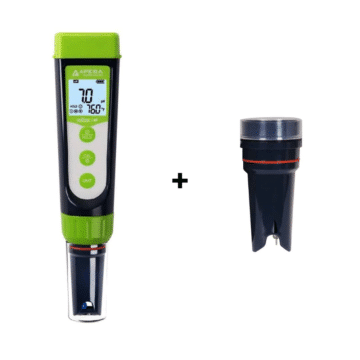
 GroStar™ GS4 pH/EC Pocket Tester + ORP Electrode262.99 €
 -
GroStar™ GS1 Pocket Tester with ORP Electrode191.59 €
-
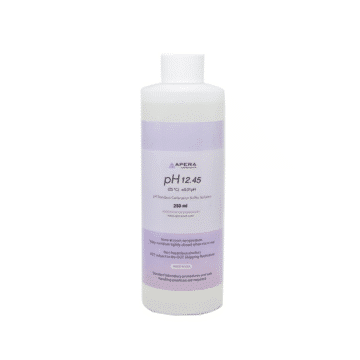
Calibration Solution, pH 12.4517.85 €(71.40 € / 1 L)
-
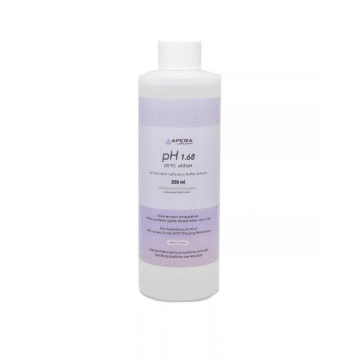
Calibration Solution, pH 1.6817.85 €(71.40 € / 1 L)
-
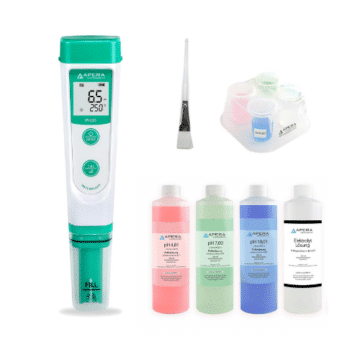
Product on salePH20 Pocket Tester with Calibration Solution SetUVP: Original price was: 116.62 €.93.30 €Current price is: 93.30 €.
-
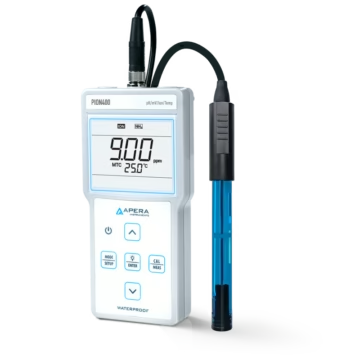
PION400 Portable Ion/pH Meter440.90 €
-
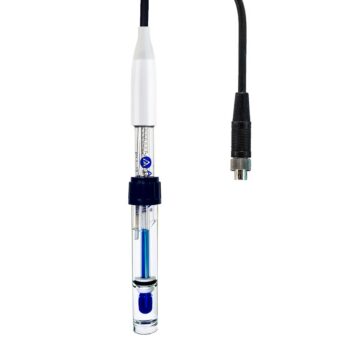
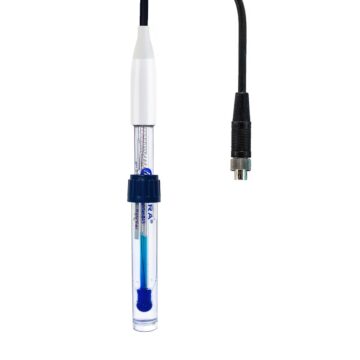
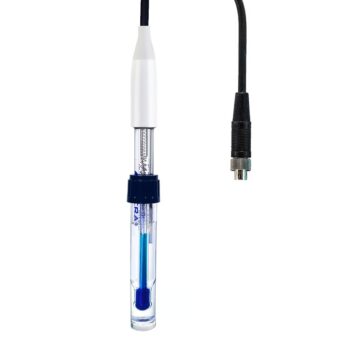
LabSen® 855 combined pH electrode for viscous solutions, 8pin201.11 €
-
LabSen® 865 combined pH electrode for high-temperature and alkaline solutions, e.g. electroplating solutions, 8-pin connection203.49 €
-
LabSen® 845 combined pH/temp. electrode for strongly alkaline solutions, 8-pin connection197.54 €
-
LabSen® 835 combined pH/temp. electrode for highly acidic solutions and hydrofluoric acid (HF), 8-pin connection197.54 €
-
LabSen® 335 combined pH electrode for waste water, emulsions and suspensions, 8-pin connection105.91 €
-
LabSen® 765 combined blade pH electrode for meat, 8-pin connection424.83 €
-
LabSen® 246-5 pH/temp. electrode for small sample volumes, 8-pin connection248.71 €
-
LabSen® 805 glass electrode (pH/temperature) for pure water and low ion-concentrated solution, 8-pin connection203.49 €
-
PH60Z-HT pH meter set for high temperature measurements332.01 €