
Water quality is one of the most important factors for success in aquaculture. Fish, crustaceans, mussels and other aquatic organisms react sensitively to changes in their environment. Even small fluctuations in certain water parameters can affect growth, health and survival rates.
By regularly monitoring water quality, problems can be identified at an early stage and optimum conditions created for the breeding and keeping of aquatic organisms.

Why is water analysis important in aquaculture?
In closed and partially closed aquaculture systems, the water values change continuously. Feeding, metabolic processes, biological activity and environmental influences can affect the water quality.
Regular checks will help:
- To support the health of the animals
- Optimize growing conditions
- Recognize stress factors at an early stage
- Avoid water quality problems
- Reduce production losses
- Improve the stability of the system
For this reason, water analysis is one of the most important tasks in the daily operation of an aquaculture facility.
Dissolved Oxygen (DO) in aquaculture
The dissolved oxygen content is one of the most important water parameters in fish farming and aquaculture. Fish and other aquatic organisms require sufficient oxygen for respiration, growth and metabolism.
Oxygen concentrations above 5 mg/L are recommended for many fish species. Values above 7 mg/L are often aimed for in order to create optimum growth conditions. If the Dissolved Oxygen level falls permanently below around 3 to 5 mg/L, stress reactions can occur and the health of the animals can be impaired.
Further information:
- To the parameter page Dissolved Oxygen (DO)
The pH value as an important water parameter
The pH value influences numerous biological and chemical processes in the water. Changes can affect the availability of nutrients, the activity of microorganisms and the general balance of the system.
In many freshwater systems, a pH value between 6.5 and 8.5 is aimed for. However, the optimum range depends on the respective fish species, the stocking and the operating conditions of the system.
Regular monitoring helps to ensure stable conditions for animals and biological processes.
Further information:
- To the parameter page pH value
Salt content and salinity
Salinity is a crucial parameter in seawater systems and in certain aquaculture systems. Many species require a stable salt content in order to find optimal living conditions.
Seawater systems are often operated in ranges of around 30 to 35 PSU. Brackish water systems, on the other hand, can have significantly lower salinities. The appropriate salinity always depends on the requirements of the animal species kept.
Even small changes can affect the well-being and development of organisms.
Further information:
- To the parameter page Salt content (salinity)
Conductivity (EC) and water quality
Electrical conductivity provides information about the concentration of dissolved ions and salts in water. It is often used to detect changes in the water composition and to monitor the stability of a system.
Further information:
- To the parameter page Conductivity (EC)
- To the parameter page TDS
Temperature as a key factor in aquaculture
The water temperature influences the metabolism, growth, oxygen requirements and food intake of many aquatic organisms. At the same time, the amount of oxygen that can be dissolved in the water decreases as the temperature rises.
For this reason, temperature and Dissolved Oxygen are often monitored together in professional aquaculture facilities. However, the optimum temperatures vary considerably depending on the species and farming system.
Typical challenges in aquaculture
Operators of aquaculture facilities often face the following challenges:
- Fluctuating Dissolved Oxygen
- Changes in the pH value
- Increase in organic loads
- Changes in salinity
- High stocking densities
- Seasonal temperature fluctuations
Continuous monitoring of water parameters helps to detect such changes at an early stage and initiate appropriate measures.
Recommended measuring devices for aquaculture
They are particularly suitable for professional water analysis in aquaculture systems:
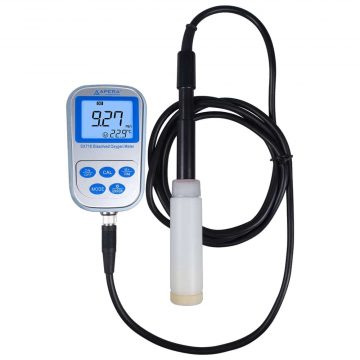
- Oxygen meters (DO)
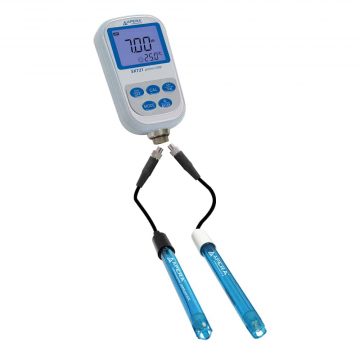
- pH meters
- Conductivity meters (EC)
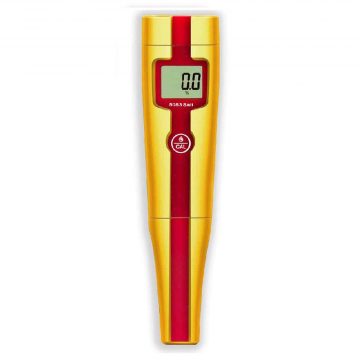
- Salinity meters
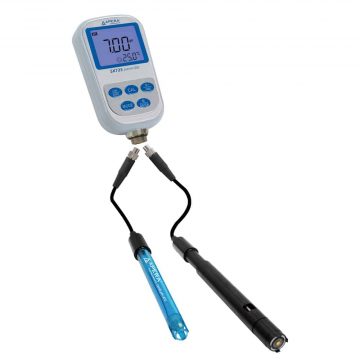
- Multiparameter measuring devices
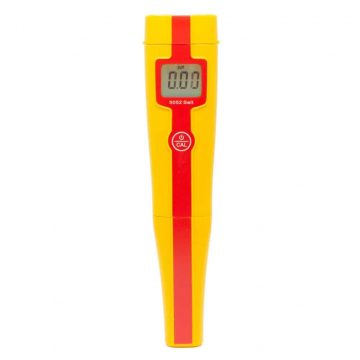
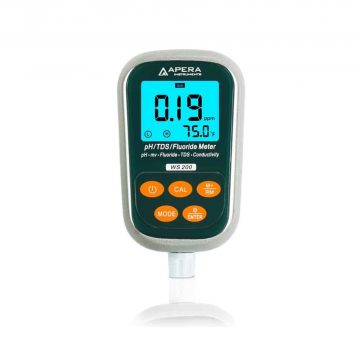
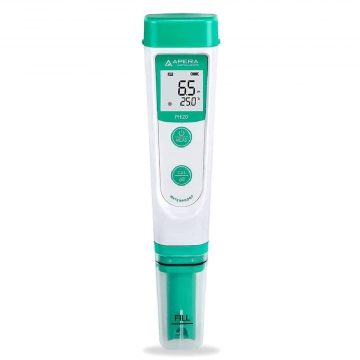
Apera Instruments offers precise measuring devices for monitoring water quality in fish farms, recirculation systems, aquaculture operations and research facilities. The devices enable fast and reliable measurements directly on site.
Related topics
If you would like to find out more about individual measurement parameters, you can find further information on our specialist pages:
- pH level
- Conductivity (EC)
- TDS (Total Dissolved Solids)
- Salt content (salinity)
- Dissolved Oxygen
- Water Hardness
Our guides take a practical approach: “What Is Dissolved Oxygen (DO)?” explains the most important parameter in aquaculture in detail, and “Dissolved Oxygen in Ponds” shows how this value changes throughout the day and across the seasons.
-
Product on sale
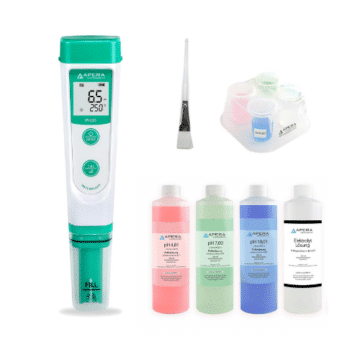
 PH20 Pocket Tester with Calibration Solution SetUVP: Original price was: 116.62 €.93.30 €Current price is: 93.30 €.
 -
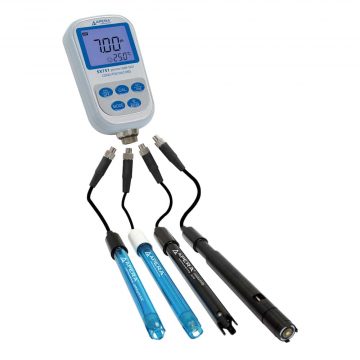
SX751 portable pH/Dissolved Oxygen (DO)/ORP/Conductivity (EC)/TDS/Salinity/Resistivity Meter946.05 €
-
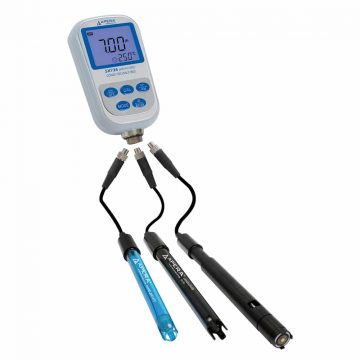
SX736 portable pH/Conductivity (EC)/TDS/Salinity/Resistivity/Dissolved Oxygen (DO) Meter856.80 €
-
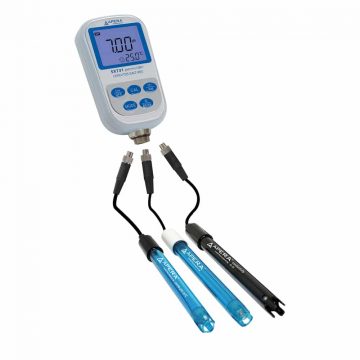
SX731 portable pH/ORP/Conductivity (EC)/TDS/Salinity/Resistivity Meter573.58 €
-
SX725 portable pH/Dissolved Oxygen (DO) Meter689.01 €
-
SX721 portable pH/ORP meter351.05 €
-
SX716 portable Dissolved Oxygen (DO) Meter589.05 €
-
5053 Salinity Meter for high salinity concentration113.05 €
-
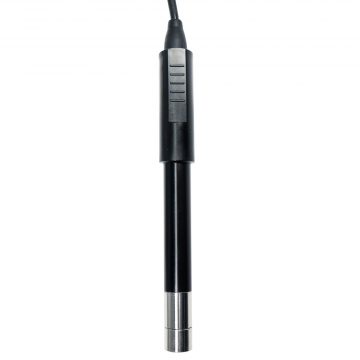
DO803 Luminescent Optical DO ElectrodePrice range: 847.28 € through 999.60 €
-
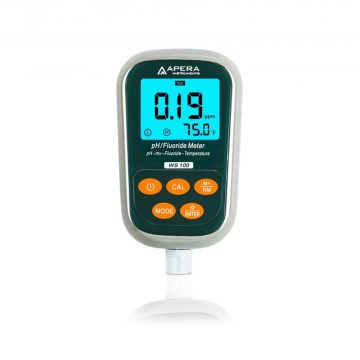
WS100 Fluoride/pH meter with 3-in-1 fluoride electrode760.41 €
-
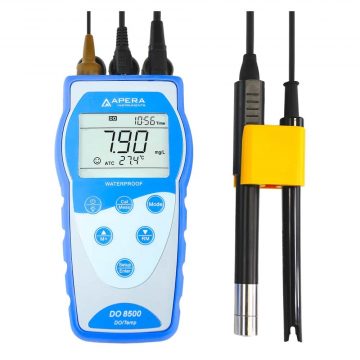
DO8500 optical oxygen meter with GLP memory function and data output1,425.62 €
-
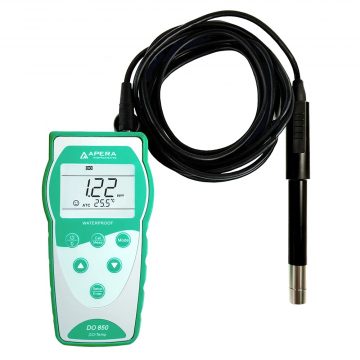
DO850 optical oxygen meter1,187.62 €
-
5052 Salinity meter for seawater113.05 €
-
WS200 Fluoride/pH/Conductivity Meter with 3-in-1 Fluoride Electrode915.11 €
-
PH20 Value pH Pocket Tester83.30 €