
Successful agriculture is based on the optimal supply of plants with water and nutrients. In addition to soil conditions, climate and fertilization, various measurement parameters play a decisive role in the growth, yield and quality of agricultural crops.
By regularly analysing soil samples and irrigation water, important influencing factors can be identified at an early stage and optimized in a targeted manner. The pH value and electrical conductivity (EC) in particular provide valuable information about the availability of nutrients and the quality of soils and nutrient solutions.
Why are measurements important in agriculture?
Plants can only absorb nutrients if the chemical conditions in the soil and water are right. Even with sufficient fertilization, unsuitable pH values or an unbalanced salt content can impair nutrient uptake.
Regular measurements help with this:
- Recognize nutrient deficiencies at an early stage
- Adjust fertilization in a targeted manner
- Monitor soil quality in the long term
- Secure earnings
- Using resources efficiently
- Avoid over-fertilization
This allows cultivation processes to be better controlled and the sustainability of agricultural land to be improved.
The pH value in the soil
The pH value is one of the most important parameters in agriculture. It directly influences the availability of many essential nutrients such as iron, magnesium, zinc and phosphorus.
Many agricultural crops prefer soil pH values between 5.5 and 7.0. Outside this range, the availability of important nutrients such as phosphorus, iron or magnesium can be limited. However, the optimum values depend on the respective plant species and the site conditions.
Further information:
- To the parameter page pH value
Conductivity (EC) in soil and irrigation water
Electrical conductivity (EC) provides information on the concentration of dissolved ions and nutrients. It is often used to monitor the quality of irrigation water and the availability of nutrients in solutions.
An EC value that is too low can indicate a lack of dissolved nutrients. On the other hand, values that are too high can indicate an increased salt load and impair plant growth.
Further information:
- To the parameter page Conductivity (EC)
- To the parameter page TDS
- To the parameter page Salt content (salinity)
Water quality in agriculture
In addition to the properties of the soil, the quality of the irrigation water also plays an important role. Parameters such as pH value, conductivity, salt content and water hardness can influence the nutrient supply and long-term soil development.
Regular analysis helps to detect changes at an early stage and to monitor the water quality on a permanent basis.
Further information:
- To the parameter page Water hardness
Typical challenges in agriculture
Agricultural businesses often face the following challenges:
- Fluctuating soil pH values
- Salt pollution through irrigation
- Nutrient imbalances
- Changes in water quality
- Over- or under-fertilization
- Regional differences in soil quality
Regular measurements allow these factors to be better evaluated and optimized in a targeted manner.
Recommended measuring devices for agriculture
Particularly suitable for agricultural applications:
- pH meters for soil and water samples
- Conductivity meters (EC)
- Multi-parameter measuring devices
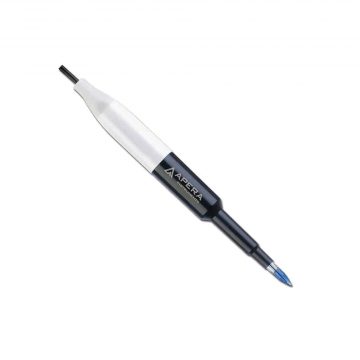
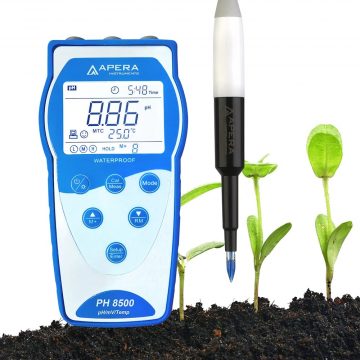
- Special floor electrodes for direct measurements
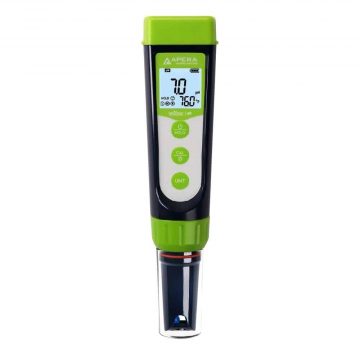
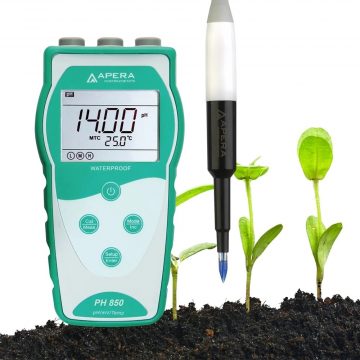
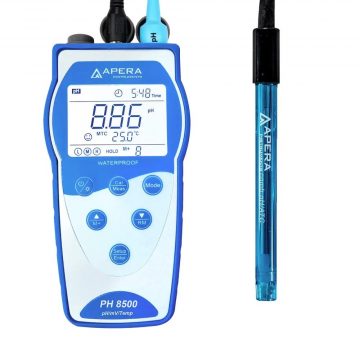
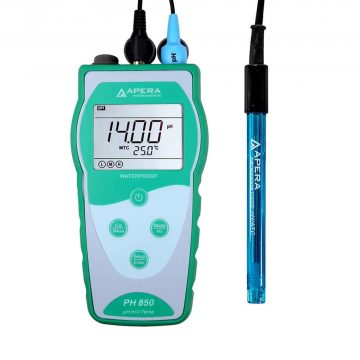
Apera Instruments offers special solutions for soil analysis, irrigation water and agricultural applications. The GroStar series in particular was developed to meet the requirements of modern agriculture.
Related topics
If you would like to find out more about the individual water parameters, you can find further information on our specialist pages:
- pH level
- Conductivity (EC)
- TDS (Total Dissolved Solids)
- Salt content (salinity)
- Dissolved Oxygen
- Water Hardness
You can find the basics of both parameters in ” What Is pH?” and ” How Do I Measure Conductivity?“
-
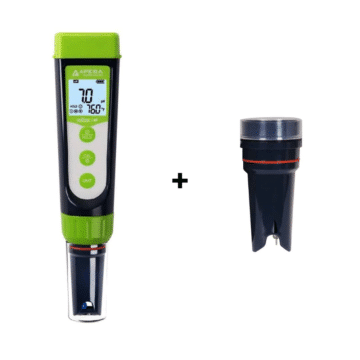
 GroStar™ GS4 pH/EC Pocket Tester + ORP Electrode262.99 €
 -
GroStar™ GS1 Pocket Tester with ORP Electrode191.59 €
-
GroStar™ GS4 pH/EC Pocket Tester191.59 €
-
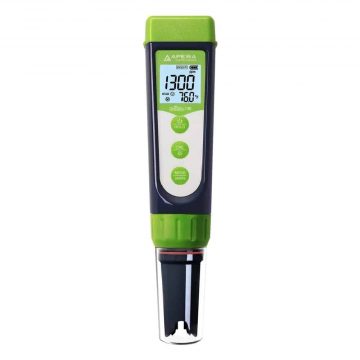
GroStar™ GS3 conductivity Pocket Tester114.24 €
-
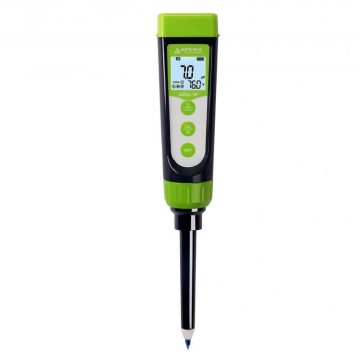
GroStar™ GS2 PenTester for soil samples274.89 €
-
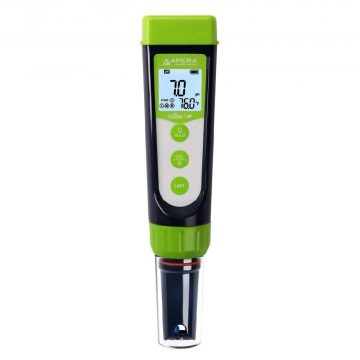
GroStar™ GS1 pH Pocket Tester120.19 €
-
LabSen® 551 pH insertion electrode for solid samples and soil measurements202.30 €
-
LabSen® 553 combined pH insertion electrode for solid samples and soil measurements209.44 €
-
PH8500-SL pH meter for soils (direct measurement) with GLP memory function and data output553.35 €
-
PH850-SL pH meter for soils (direct measurement)458.15 €
-
PH8500 portable pH meter with GLP memory function and data output474.81 €
-
PH850 portable pH meter355.81 €