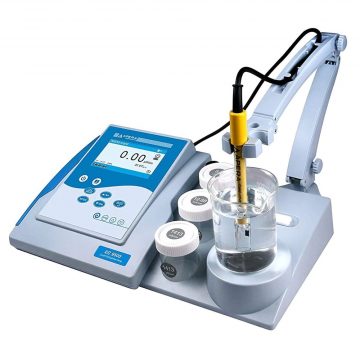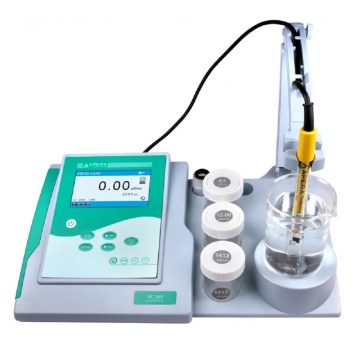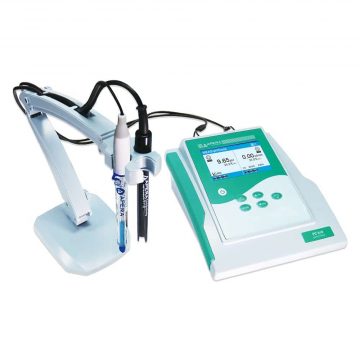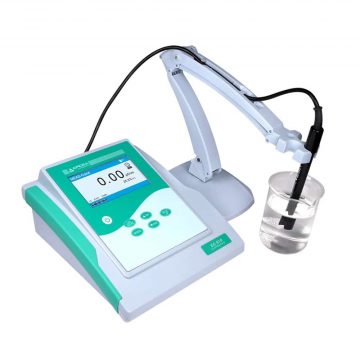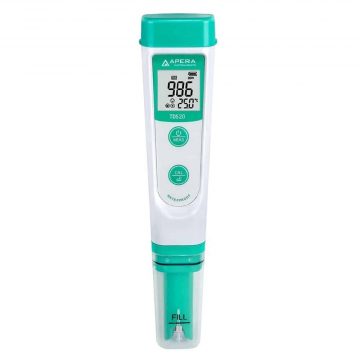

TDS (Total Dissolved Solids) describes the total amount of all substances dissolved in water. This includes minerals, salts, metals and other dissolved substances that are not visible to the naked eye. The TDS value is an important indicator for assessing water quality and is used in numerous areas such as drinking water analysis, water treatment, aquaristics, agriculture and industry.
TDS is usually given in ppm (parts per million) or mg/L (milligrams per liter). The higher the TDS value, the more dissolved substances there are in the water.
What does the TDS value mean?
The TDS value provides information on the total amount of solids dissolved in the water. These substances include, among others:
- Calcium
- Magnesium
- Sodium
- Potassium
- Chlorides
- Sulfates
- Nitrates
- Other dissolved minerals and salts
However, the TDS value does not show exactly which substances are contained. Rather, it provides an overview of the total concentration of all dissolved components in the water.
Why is TDS measurement important?
The measurement of Total Dissolved Solids enables a quick assessment of the water quality. Changes in the TDS value can indicate changes in the water composition, impurities or increased concentrations of dissolved substances.
TDS analysis is often used for:
- Drinking water controls
- Reverse osmosis systems and water filter systems
- Aquariums and fish farming
- Hydroponics and agriculture
- Industrial water treatment
- Environmental monitoring and water analyses
Regular monitoring of the TDS value is an important part of quality control, particularly when monitoring filter systems and pure water systems.
How is TDS measured?
In practice, TDS is usually determined indirectly via the electrical conductivity (EC) of the water. As dissolved ions conduct electricity, a measuring device can calculate the TDS value based on the conductivity.
Modern TDS measuring devices enable fast and precise measurements directly on site. The results are available within a few seconds and facilitate the continuous monitoring of water quality.
TDS and conductivity: What’s the difference?
TDS and electrical conductivity are closely related, but describe different measured variables.
Electrical conductivity measures the ability of water to conduct electricity. The TDS value, on the other hand, indicates the estimated concentration of all dissolved substances in the water. Many measuring devices therefore offer the option of displaying both the conductivity and the TDS value.
What are the usual TDS values?
The evaluation of a TDS value depends heavily on the respective application. Drinking water naturally contains dissolved minerals and therefore usually has a higher TDS value than ultrapure water from a reverse osmosis system.
A very low TDS value indicates a low content of dissolved substances, while high values indicate an increased concentration of minerals, salts or other substances.
TDS meters from Apera Instruments
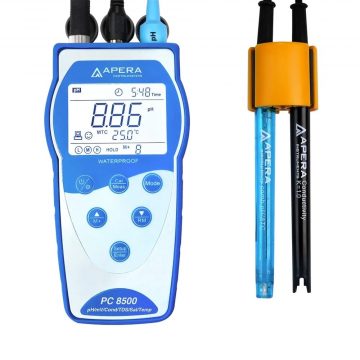
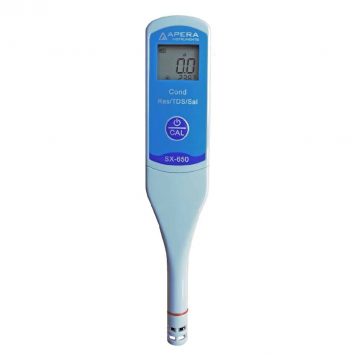
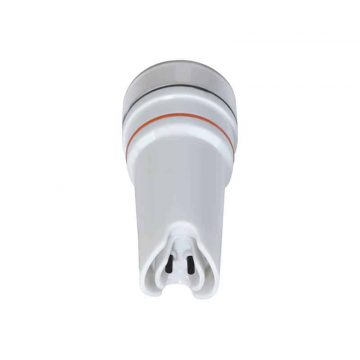
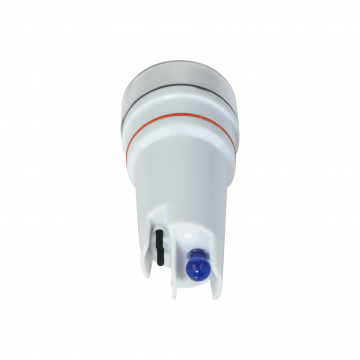
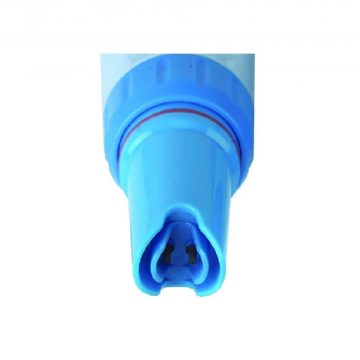
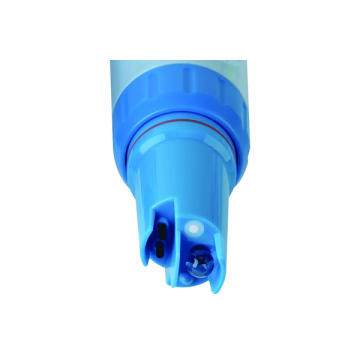
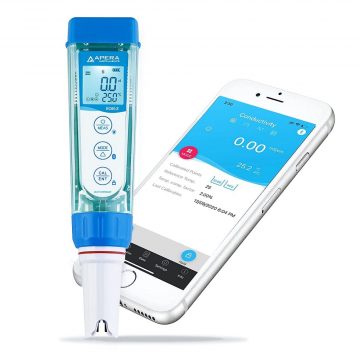
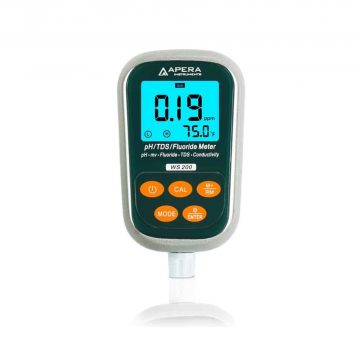
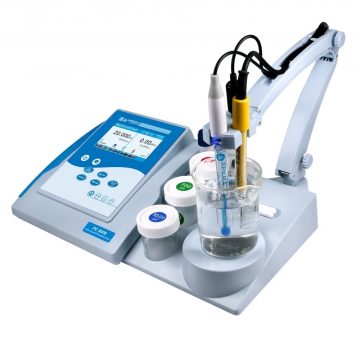
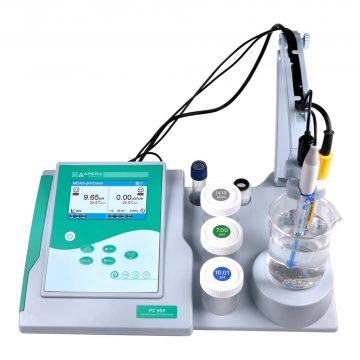
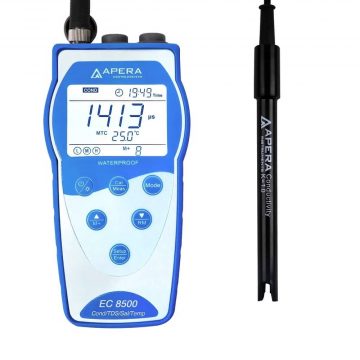
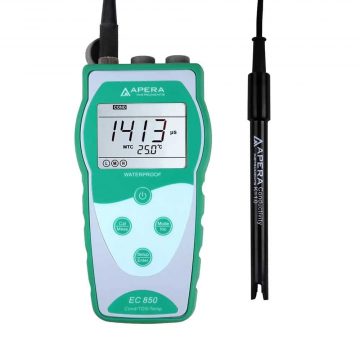
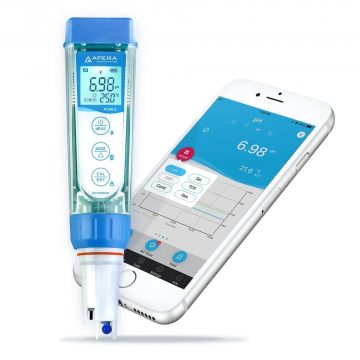
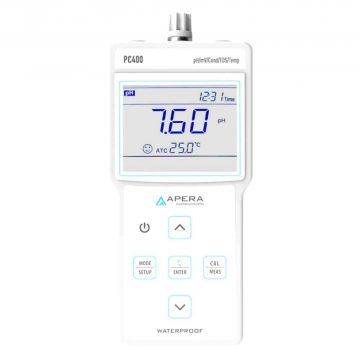
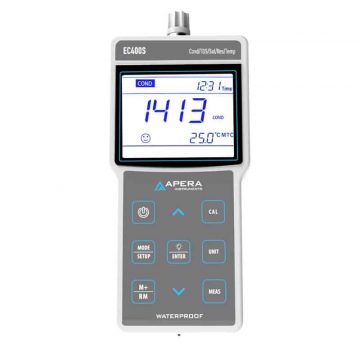
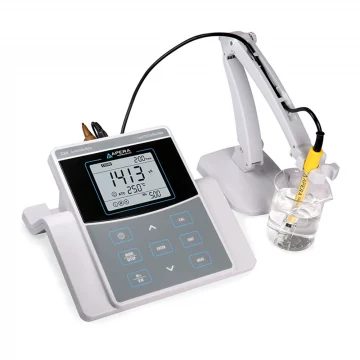
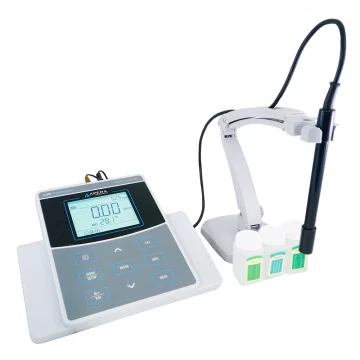
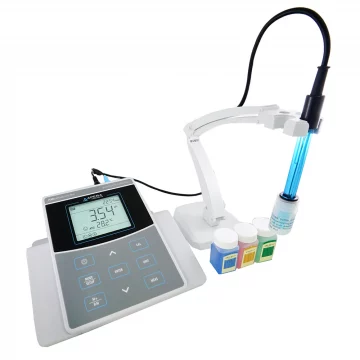
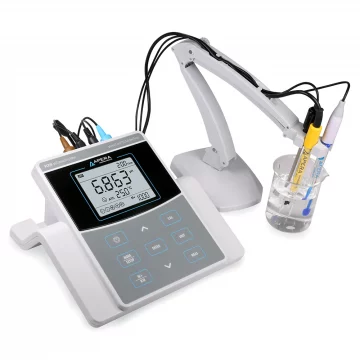
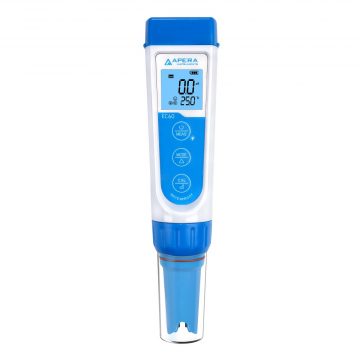
Apera Instruments TDS meters are designed for precise and reliable measurements. They are suitable for professional applications in laboratories, industry, and water treatment, as well as for use in aquaristics, hydroponics, and private water analysis.
With modern sensor technology, simple operation and fast measurement acquisition, Apera measuring devices support the reliable monitoring of water quality in a wide range of applications.
Frequently Asked Questions
What is a good TDS level for drinking water?
The WHO recommends a TDS level below 600 ppm as acceptable for drinking water; a level below 300 ppm is considered excellent. The Drinking Water Ordinance in Germany does not set a direct TDS limit, but is based on conductivity (max. 2,500 µS/cm). Water from reverse osmosis systems often has a TDS level below 50 ppm.
What is the difference between TDS and conductivity?
Conductivity (EC) is the directly measurable electrical property of water, expressed in µS/cm or mS/cm. TDS is calculated from this value by multiplying it by a conversion factor (usually 0.5–0.7). TDS indicates the total amount of dissolved solids in ppm. Both values describe the mineral concentration, but they are not exactly the same.
What is the correct TDS level for hydroponics?
In hydroponic systems, the optimal TDS level depends on the plant species and growth stage. Guidelines: Seedlings 400–600 ppm, growth phase 800–1,400 ppm, flowering phase 1,200–2,000 ppm. Levels that are too high inhibit water uptake by the roots, while levels that are too low lead to nutrient deficiencies.
Can I measure TDS in my aquarium?
Yes, TDS measurements are useful in aquariums. For freshwater aquariums, 100–400 ppm is recommended depending on the fish species; species that prefer soft water, such as discus, prefer levels below 150 ppm. In saltwater aquariums, significantly higher levels are normal. Devices like the PC60 measure TDS along with pH, EC, and salinity all in one.
How accurate is a TDS meter?
TDS values are calculated indirectly based on conductivity and are therefore an approximation—the actual composition of the dissolved substances affects the result. Apera devices such as the EC20, EC60, or PC60 measure conductivity with ±1% accuracy and automatically derive TDS from this measurement. For precise laboratory analyses, the gravimetric method is used.
-
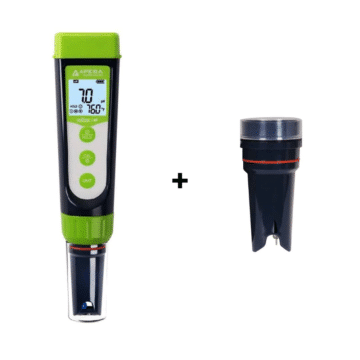
 GroStar™ GS4 pH/EC Pocket Tester + ORP Electrode262.99 €
 -
PCO60-Z Smart Multiparameter Meter309.40 €
-
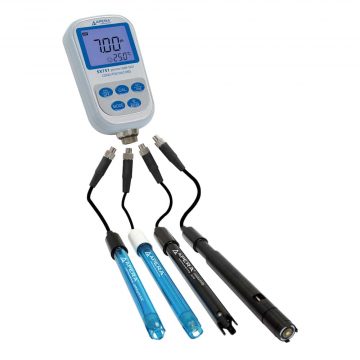
SX751 portable pH/Dissolved Oxygen (DO)/ORP/Conductivity (EC)/TDS/Salinity/Resistivity Meter946.05 €
-
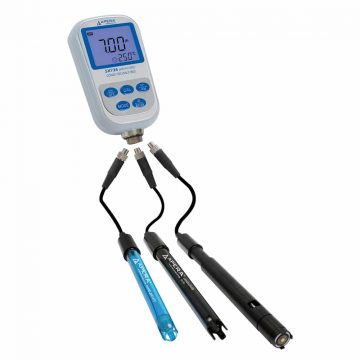
SX736 portable pH/Conductivity (EC)/TDS/Salinity/Resistivity/Dissolved Oxygen (DO) Meter856.80 €
-
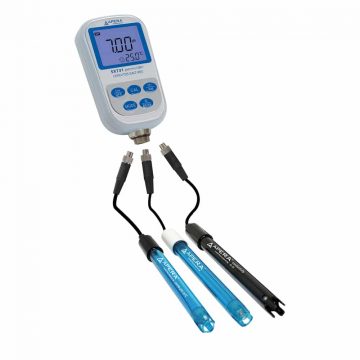
SX731 portable pH/ORP/Conductivity (EC)/TDS/Salinity/Resistivity Meter573.58 €
-
PC8500 portable pH/conductivity meter with GLP memory function and data output821.10 €
-
SX650 conductivity pocket meter126.14 €
-
EC60-DE Spare electrode for EC60-Z54.74 €
-
PC60-DE Replacement electrode for PC60-Z105.91 €
-
EC9500 Laboratory conductivity meter868.70 €
-
EC950 Laboratory Conductivity Meter654.50 €
-
PC910 Laboratory pH/Conductivity Meter721.14 €
-
EC910 Laboratory conductivity meter535.50 €
-
EC60-E Replacement electrode for EC6054.74 €
-
PC60-E multiparameter electrode95.20 €
-
EC60-Z Smart conductivity meter172.55 €
-
WS200 Fluoride/pH/Conductivity Meter with 3-in-1 Fluoride Electrode915.11 €
-
PC9500 Laboratory pH/conductivity benchtop meter1,309.00 €
-
PC950 pH/Conductivity Benchtop Meter904.40 €
-
EC8500 portable conductivity meter with GLP memory function and data output545.02 €
-
EC850 portable conductivity meter391.51 €
-
PC60-Z Smart Multiparameter Meter232.05 €
-
PC400 portable pH / conductivity / TDS meter578.34 €
-
EC400S portable conductivity meter with GLP data management and USB output515.27 €
-
EC820 precise laboratory conductivity meter773.50 €
-
EC800 Laboratory/Tabletop Conductivity Meter571.20 €
-
PC800 pH/Conductivity Laboratory Multi-Parameter Meter821.10 €
-
PC820 pH/Conductivity Laboratory Meter for Precision Measurement1,059.10 €
-
EC60 Premium Conductivity Pocket Meter127.33 €
-
TDS20 Value TDS Pocket Tester83.30 €