
Turbidity describes the optical clarity of a liquid and is an important parameter for assessing water quality. It is caused by fine suspended matter, particles or other undissolved components that scatter the light and make the water appear less transparent.
Turbidity measurement is used in drinking water monitoring, environmental analysis, water treatment, aquaculture and numerous industrial applications. It provides important information about the quality of a water sample and can indicate impurities or changes in the system.
What is turbidity?
Turbidity is caused by undissolved particles in a liquid. These include, for example
- Sediments
- Mud and sand
- Organic substances
- Algae
- Microorganisms
- Other suspended solids
The higher the concentration of these particles, the more the light is scattered and the higher the measured turbidity.
The turbidity is often specified in the unit NTU (Nephelometric Turbidity Unit).
Why is turbidity measurement important?
Turbidity is an important indicator of water quality. Changes in turbidity can indicate natural processes, pollution or technical problems.
The measurement is used, among other things, for
- Drinking water monitoring
- Water treatment
- Environmental monitoring
- Surface waters
- Aquaculture and fish farming
- Industrial plants
- Research and laboratory analysis
Regular monitoring supports the early detection of changes and helps to control water quality in the long term.
How is turbidity measured?
Turbidity is determined using special turbidimeters. Modern devices work according to the nephelometric measuring principle and record the light scattering caused by particles in the liquid.
The stronger the light is scattered, the higher the measured turbidity value. This method enables quick and precise measurements both in the laboratory and directly on site.
What factors influence turbidity?
The turbidity of a body of water can be altered by various natural and technical influences.
The most important factors include:
- Precipitation
- Erosion
- Algae growth
- Organic loads
- Sediment turbulence
- Industrial discharges
- Biological processes
The causes of increased turbidity can vary greatly depending on the water and application.
Typical areas of application for turbidity measurement
Drinking water and water treatment
Turbidity is an important quality parameter in the monitoring and treatment of drinking water.
Environmental monitoring
In rivers, lakes and other bodies of water, turbidity measurement helps to document changes in water quality.
Aquaculture and fish farming
Increased turbidity can have an impact on living conditions and biological processes. This parameter is therefore monitored regularly.
Industry and laboratory
In industrial processes and laboratory applications, turbidity measurement supports quality control and process monitoring.
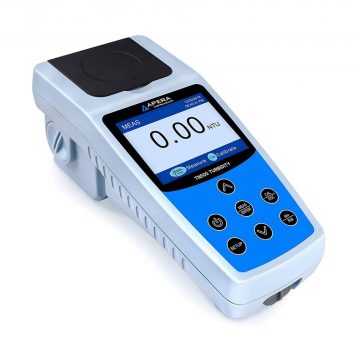
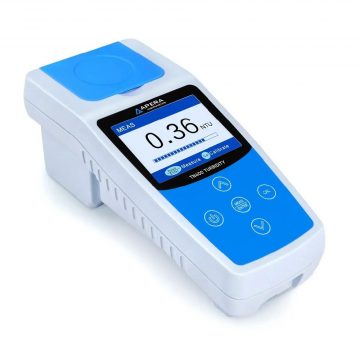
Turbidimeters from Apera Instruments
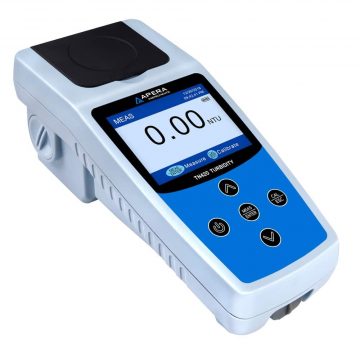
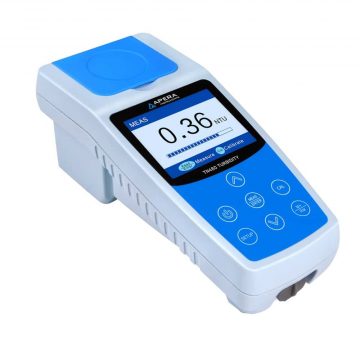
Apera Instruments offers precise turbidimeters for professional applications in water treatment, environmental analysis, research and industry. The devices enable fast and reliable measurements directly on site or in the laboratory.
Thanks to modern sensor technology, simple operation and high measuring accuracy, Apera turbidity meters support the reliable monitoring of water quality.
Frequently Asked Questions
In what unit is turbidity measured?
Turbidity is primarily measured in NTU (Nephelometric Turbidity Units), the international standard for scattered light measurement according to ISO 7027. Other commonly used units include FNU (Formazin Nephelometric Units, identical to NTU according to EN ISO 7027), FTU, and EBC (in the brewing industry). Apera turbidimeters measure in NTU and FNU.
What turbidity level is permissible for drinking water?
Germany’s Drinking Water Ordinance stipulates a maximum turbidity level of 1.0 NTU at the consumer’s faucet. The WHO recommends values below 0.1 NTU for optimal disinfection. Increased turbidity can impair the effectiveness of chlorine and UV disinfection and is therefore an important quality indicator.
What is the difference between white-light and infrared turbidity meters?
White-light turbidimeters (such as the Apera TN420 and TN500) comply with the US EPA method and are frequently used in drinking water monitoring in the United States. Infrared turbidimeters (such as the Apera TN400 and TN480) comply with the European EN ISO 7027 standard and are less susceptible to interference from the sample’s inherent color. They are particularly suitable for colored wastewater and environmental samples.
What factors affect the turbidity of a water sample?
Turbidity is caused by suspended particles such as suspended solids, algae, bacteria, clay, or organic substances. Factors contributing to turbidity include precipitation, soil erosion, industrial discharges, and biological activity. Seasonal fluctuations are typical in surface waters.
Why is turbidity measurement important in aquaculture?
In aquaculture operations, turbidity directly affects the well-being of the fish. Excessive turbidity reduces light penetration, impairs gill function, and increases oxygen demand. Regular turbidity measurements help identify water quality problems early on and prevent fish mortality.
-
 TN420 White light turbidimeter928.20 €
 -
TN480 Infrared Turbidimeter with GLP Data Management and USB Output1,213.80 €
-
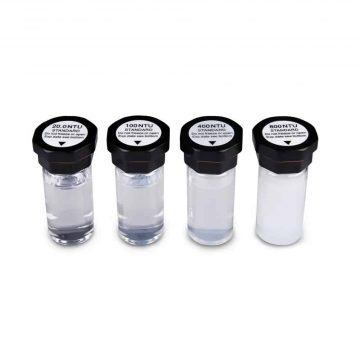
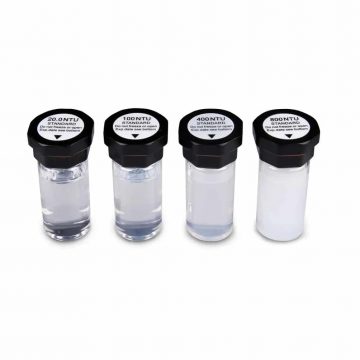
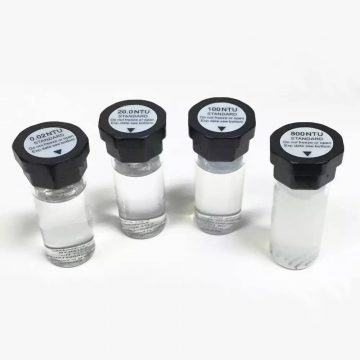
T200-1 Standard Turbidity Solution Set (20/100/400/800 NTU) for TN400/TN480154.70 €
-
T500-1 Standard Turbidity Solution Set (20/100/400/800 NTU) for TN500/TN420154.70 €
-
TN500 White Light Turbidimeter with GLP Data Management and USB Output1,284.01 €
-
TN400-S1 Turbidity Standard Solution Set154.70 €
-
TN400 Infrared Turbidimeter868.70 €