
A healthy aquarium depends entirely on water quality. Whether it’s a freshwater or saltwater tank, fish, corals, and plants are highly sensitive to even the slightest changes in pH, redox potential, or conductivity. With the right testing kits, you can keep a close eye on all key parameters and take action early on before your aquatic life suffers from poor water conditions.

Why is water analysis so important in aquariums?
In the closed system of an aquarium, water parameters change continuously: Fish excrete metabolic waste products, plants consume CO₂ and produce oxygen, and uneaten food decomposes. What is balanced out in natural bodies of water through dilution and self-purification can reach critical levels in an aquarium within just a few days.
Regular measurements allow you to:
- Identifying stressful situations for fish and corals early on
- Controlling Algal Growth Through an Optimized Nutrient Balance
- To test the effectiveness of water treatment chemicals
- To confirm rapid stabilization after water changes
- Preventing disease outbreaks, which are often triggered by water stress
- Creating optimal conditions for sensitive species and corals
The pH Level in the Aquarium
The pH level is one of the most important parameters in any aquarium. It describes the acid-base balance of the water and influences nearly all biological processes, from gill function to the effectiveness of the biofilter.
Different target values apply depending on the fish stock: For most freshwater fish, the optimal range is 6.5 to 7.5; for East African cichlids, it is 7.5 to 8.5. In a saltwater tank with corals, a stable pH level of 8.1 to 8.3 is crucial. Fluctuations of more than 0.3 units within a single day can cause significant stress to corals.
What makes this particularly tricky is that the pH level in the aquarium fluctuates on a daily cycle. During the day, plants consume CO₂, causing the pH to rise; at night, it drops again. A good meter reliably displays these fluctuations.
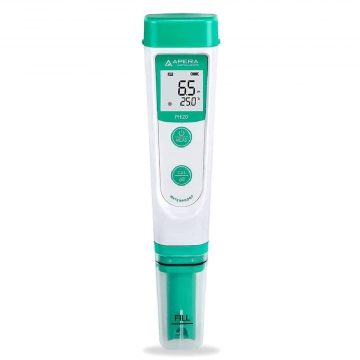
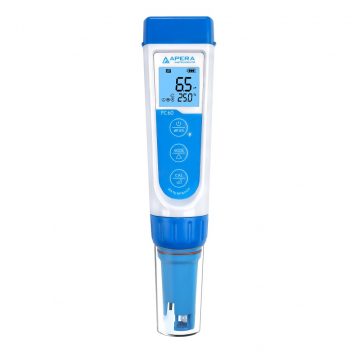
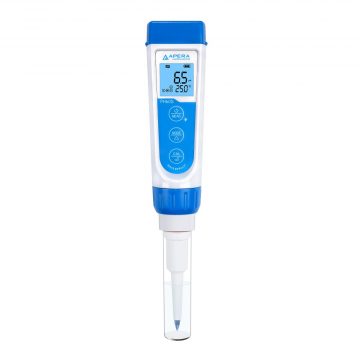
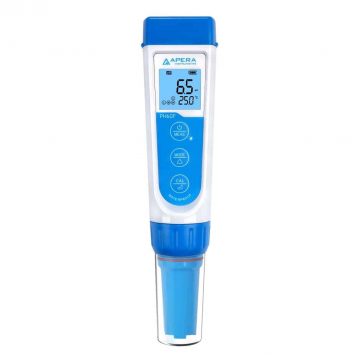
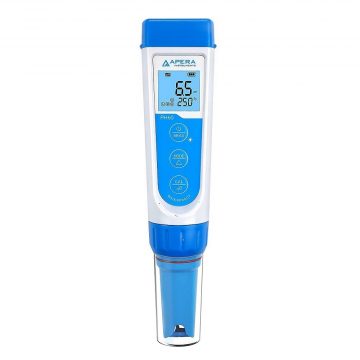
For home aquarists, we recommend a compact Pocket Tester such as the PH20 for quick daily testing or the PH60 for more precise measurements with an accuracy of ±0.01.
Comprehensive Guide: How to Properly Measure and Adjust the pH Level in Your Aquarium.
ORP/Redox Potential: Your Aquarium’s Health Index
Oxidation-reduction potential (ORP) is an essential parameter, especially in marine aquariums, but it is also increasingly being measured by experienced freshwater aquarists. It describes the water’s ability to oxidize and neutralize harmful substances. A high ORP value indicates clean, biologically active water.
The following are general guidelines:
- 250–350 mV: A good range for freshwater aquariums
- 350–450 mV: Ideal for saltwater tanks and reef aquariums
- Below 200 mV: Warning signal; biological filtration effect is diminishing
A low ORP value often indicates excessive organic load, such as from overfeeding or a filter that is overdue for cleaning. The ORP60 measures the redox potential quickly and accurately. If you want to measure both pH and ORP with a single device, the PC60 is a good choice, as it measures both parameters along with EC and TDS. Alternatively, with app connectivity: ORP60-Z or PC60-Z.
Detailed Instructions: How Do I Measure the ORP Value?
Conductivity (EC) and TDS in the Aquarium
Electrical conductivity (EC) and the related TDS (Total Dissolved Solids) value provide information about the total amount of dissolved substances in the water. In an aquarium, this value helps monitor the concentration of minerals, salts, and nutrients.
Typical guidelines based on water type:
- Soft-water aquarium (e.g., Amazon-style tank): 50–150 µS/cm
- Mixed freshwater (e.g., community tanks): 200–500 µS/cm
- Hard water/cichlids (e.g., Malawi): 500–1,000 µS/cm
- Seawater (reef aquarium): ~50–53 mS/cm
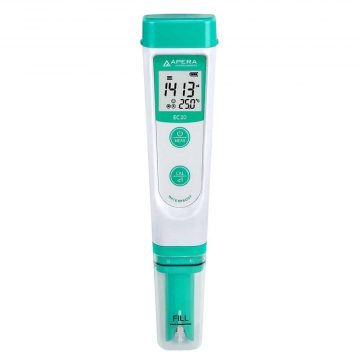
It’s a good idea to quickly check the EC, especially after adding water hardness enhancers, fertilizers, or reverse osmosis water. The EC20 is a compact tester designed for easy use at the edge of the tank. The PC60 measures EC, TDS, pH, and ORP in a single device, making it ideal for aquarists who regularly monitor multiple parameters.
Other important water parameters
Dissolved oxygen (DO)
Dissolved Oxygen is vital for fish. Levels above 6 mg/L are considered good; below 4 mg/L, conditions become critical for many species. Dissolved Oxygen depletion often occurs at night, when plants stop producing oxygen, or during the summer when temperatures are high, since warm water dissolves less oxygen.
More on oxygen measurement: What is dissolved oxygen (DO)?
Temperature
Temperature and Dissolved Oxygen are directly related: The warmer the water, the less Dissolved Oxygen it can hold. At the same time, fish consume more Dissolved Oxygen at higher temperatures, creating a double burden during hot spells.
Water Hardness
Total hardness (GH) and carbonate hardness (KH) affect the pH stability of the aquarium. Sufficient KH buffers the pH and prevents dangerous drops, which is especially important in heavily planted tanks with a CO₂ system.
Common Challenges in the Aquarium Hobby
- pH drop due to excessive CO₂ or insufficient carbonate hardness
- The redox potential drops after feeding or when the filters are overloaded
- Conductivity Spikes Following Water Changes Using Water Treated in Different Ways
- Oxygen Deficiency at Night in Heavily Planted Tanks
- Parameter fluctuations caused by seasonal temperature fluctuations
- Seawater: Salinity fluctuates due to evaporation if there is no automatic refill system
Recommended Measuring Instruments for Aquariums
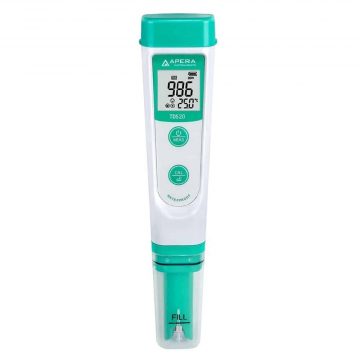
Apera Instruments offers compact Pocket Testers that are specifically designed for regular use with aquariums. All devices are waterproof, easy to calibrate, and provide accurate readings in just a few seconds.
Multiparameter Meters: The PC60 measures pH, ORP, EC, and TDS in a single device—the ideal choice for anyone who wants to regularly monitor multiple parameters.
pH Meters: The PH20 is the perfect entry-level meter for freshwater aquariums. With an accuracy of ±0.01, the PH60 provides reliable readings even for saltwater and demanding coral tanks.
ORP Meters: The ORP60 accurately measures redox potential and is especially indispensable for saltwater aquariums.
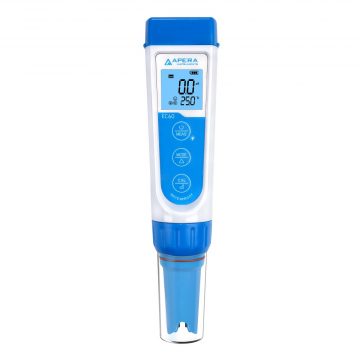
Conductivity/TDS Meters: The EC20 quickly and easily monitors mineral content and salt concentration in aquarium water.
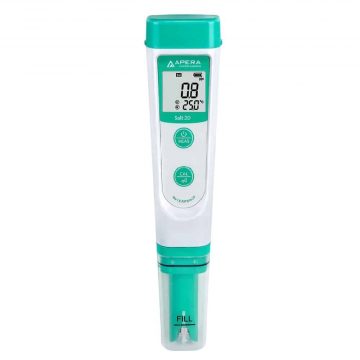
Salinity Meters: The Salt20 is a quick way to test the salinity of your saltwater tank and helps you reliably compensate for evaporation losses.
Related topics
If you would like to find out more about individual measurement parameters, you can find further information on our specialist pages:
- pH: What It Means and How to Measure It
- Oxidation-Reduction Potential (ORP): Water’s Health Index
- Electrical Conductivity (EC)
- TDS: Total Dissolved Solids
- Dissolved oxygen (DO)
- Aquaculture: Water Quality in Fish Farming
- Swimming Pools: Monitoring Water Quality
-
 Storage Cap for APERA 20 Series Meters2.98 €
 -
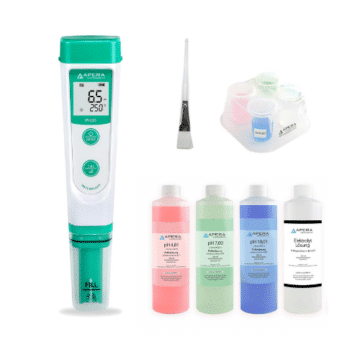
Product on salePH20 Pocket Tester with Calibration Solution SetUVP: Original price was: 116.62 €.93.30 €Current price is: 93.30 €.
-
20 Series Spare Parts Package11.90 €
-
PH20 Value pH Pocket Tester83.30 €
-
ORP60 Premium ORP Pocket Tester154.70 €
-
EC60 Premium Conductivity Pocket Meter127.33 €
-
Salt20 Value Salt Content Pocket Tester83.30 €
-
TDS20 Value TDS Pocket Tester83.30 €
-
EC20 Value Conductivity Pocket Tester83.30 €
-
PC60 Premium 5-in-1 Multi-Parameter Pocket Meter208.25 €
-
PH60S Premium pH Pocket Tester with insertion electrode295.12 €
-
PH60F Premium pH Pocket Tester with flat electrode153.51 €
-
PH60 Premium pH pocket tester124.95 €