
Dissolved oxygen (DO) is gaseous oxygen (O2) that is dissolved in water. Natural chemical processes dissolve gases such as oxygen, nitrogen and carbon dioxide in water until saturation is reached. How much oxygen can be absorbed depends on many factors, such as temperature, salinity and pressure. In general, colder water can bind more oxygen than warmer water.
Most oxygen is taken up by water from the atmosphere, with turbulent flowing water, wind and waves aiding oxygen uptake from the air. As oxygen is also produced during photosynthesis by plants and algae, the turbidity of the water, for example, also has an influence on Dissolved Oxygen, as it reduces the light that reaches the algae and aquatic plants.
The greatest consumption of oxygen in water occurs through the respiration of animals, microbes and plants, but also through the decomposition of dead organic matter by microbes and fungi. Furthermore, the dissolved oxygen can decrease when the water body warms up
Why is it important to measure Dissolved Oxygen?
Dissolved Oxygen in water is an important indicator of water quality and the health of aquatic ecosystems. A sufficient level of dissolved oxygen is vital for fish, plants and microorganisms. Even small changes can have an impact on biological processes and the stability of a body of water.
Regular measurement of Dissolved Oxygen helps to identify critical developments at an early stage and initiate appropriate measures. For this reason, oxygen measurement is one of the most important analyses in environmental monitoring and water treatment.
How is dissolved oxygen measured?
Dissolved Oxygen is determined using special oxygen measuring devices and sensors. Modern measuring systems enable quick and precise measurements directly on site or in the laboratory.
Different sensor technologies are used depending on the application. Optical oxygen sensors in particular offer high measurement accuracy, low maintenance and a long service life. The measurement results are often given in mg/L or as oxygen saturation in percent.
Regular measurements allow the water quality to be reliably monitored and documented.
Typical areas of application for oxygen measurement
The measurement of dissolved oxygen plays an important role in numerous areas:
- Aquaculture and fish farming
- Water and environmental monitoring
- Sewage treatment plants and wastewater treatment
- Drinking water treatment
- Research and laboratory analysis
- Industry and process monitoring
Dissolved Oxygen is an important indicator of the ecological status of a system, particularly in natural waters.
Oxygen meters from Apera Instruments
Apera Instruments offers modern measuring devices for the determination of dissolved oxygen for professional applications in environmental analysis, water treatment, aquaculture and laboratories. Thanks to precise sensor technology, simple operation and reliable measurement results, the devices enable efficient monitoring of Dissolved Oxygen in a wide range of water samples.
Water quality and biological processes can be reliably monitored and documented with the oxygen meters from Apera Instruments.
For more background information on the definition, influencing factors, and measurement methods, see ” What Is Dissolved Oxygen (DO)?”
Frequently Asked Questions
What is a normal level of Dissolved Oxygen in water?
In natural bodies of water, the Dissolved Oxygen content typically ranges between 7 and 11 mg/l, depending on temperature and salinity. Cold water holds more oxygen than warm water. Levels below 5 mg/l can be critical for many aquatic organisms; levels below 2 mg/l are considered oxygen-deficient.
What is the ideal level of Dissolved Oxygen for an aquarium?
For most aquarium fish, a Dissolved Oxygen level of at least 6 mg/l is recommended. Sensitive species such as trout or sturgeon require more than 8 mg/l. Signs of low Dissolved Oxygen levels include fish gathering at the water’s surface or exhibiting lethargic behavior. Good aeration and aquatic plants help increase oxygen levels.
What is the difference between optical and polarographic oxygen measurement?
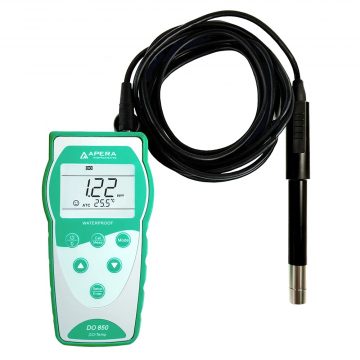
Polarographic sensors consume oxygen during measurement and require regular electrolyte and membrane changes. Optical sensors (such as those in the Apera DO850) use luminescence and require less maintenance, have a longer service life, and are less prone to interference from flow or fouling—making them ideal for continuous operation.
Why does temperature affect the Dissolved Oxygen?
Oxygen dissolves more easily in cold water than in warm water. At 10 °C, water can hold about 11.3 mg/l of oxygen, but at 25 °C, only about 8.3 mg/l. That is why oxygen deficiency occurs more frequently in the summer. Professional measuring devices automatically compensate for this temperature effect.
In what units is dissolved oxygen measured?
Dissolved oxygen is typically expressed in mg/l (milligrams per liter) or ppm (parts per million)—both units are equivalent. In aquaculture and environmental monitoring, mg/l is the most commonly used unit. Some devices also display the percentage of oxygen saturation (% DO).
-
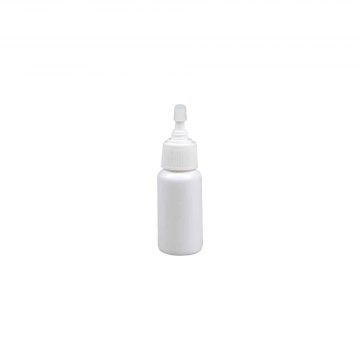
 DO502 electrolyte solution refill for DO500 electrode (30ml)23.80 €(793.33 € / 1 L)
 -
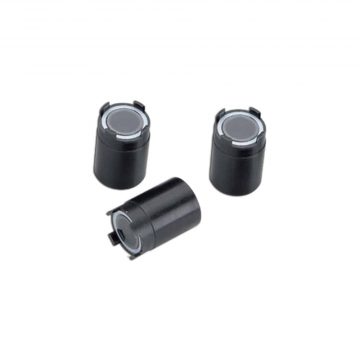
DO503 Membrane caps for DO500 electrode57.12 €
-
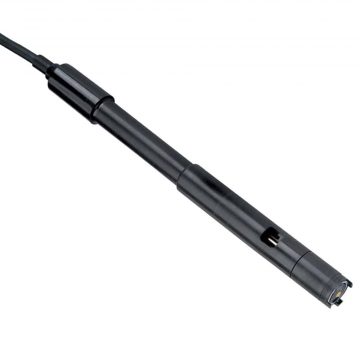
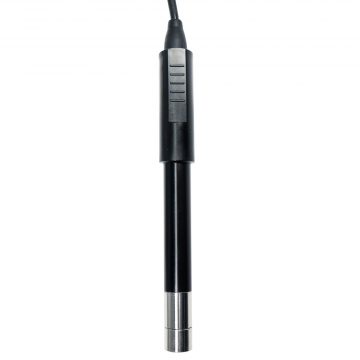
DO500 polarographic DO electrode309.40 €
-
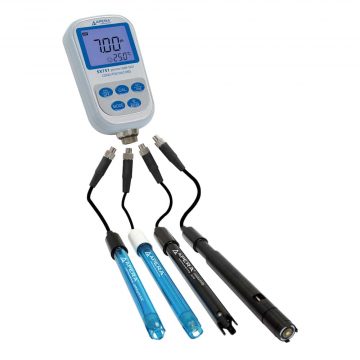
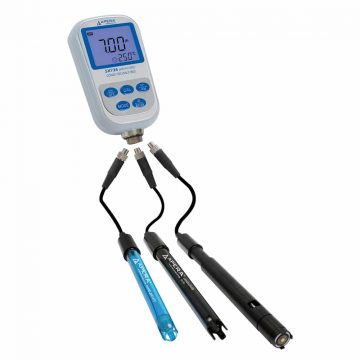
SX751 portable pH/Dissolved Oxygen (DO)/ORP/Conductivity (EC)/TDS/Salinity/Resistivity Meter946.05 €
-
SX736 portable pH/Conductivity (EC)/TDS/Salinity/Resistivity/Dissolved Oxygen (DO) Meter856.80 €
-
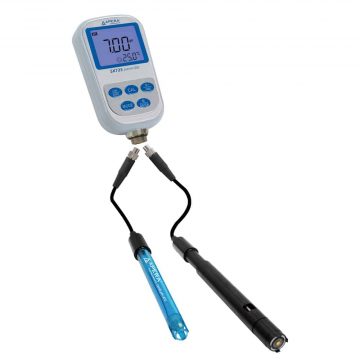
SX725 portable pH/Dissolved Oxygen (DO) Meter689.01 €
-
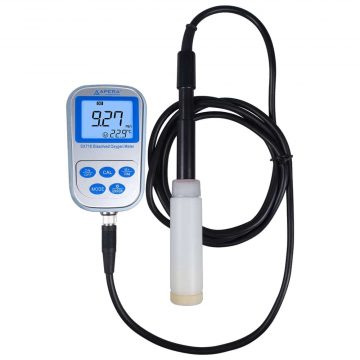
SX716 portable Dissolved Oxygen (DO) Meter589.05 €
-
DO803 Luminescent Optical DO Electrode847.28 €
-
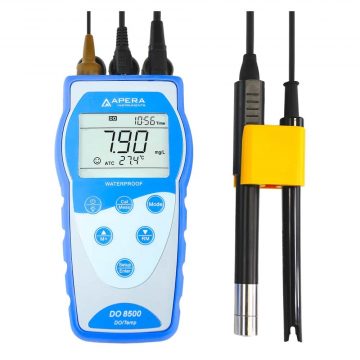
DO8500 optical oxygen meter with GLP memory function and data output1,425.62 €
-
DO850 optical oxygen meter1,187.62 €